


Supercritical CO₂Cleaning Technology
May 29, 2025
Leave a message
After the chip manufacturing process entered the nano era, a seemingly contradictory problem surfaced: how to completely remove the residue in deep holes and trenches without damaging the fragile nanostructure? While traditional aqueous and plasma cleaning can damage high lift-to-aspect ratio structures due to the surface tension of the liquid, supercritical carbon dioxide (sCO₂) cleaning technology, with its unique physical properties, is rewriting the rules of semiconductor cleaning.
Supercritical CO₂: When the boundary between gas and liquid disappears
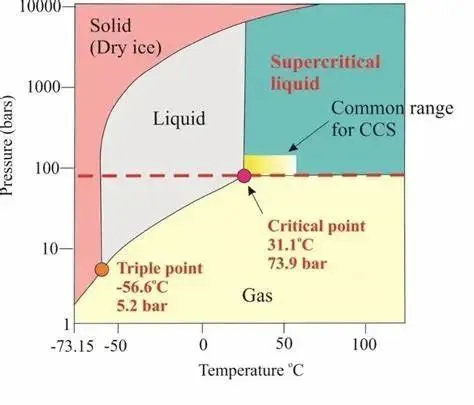
When carbon dioxide is above the critical point (temperature 31.1 °C, pressure 7.38 MPa), it enters a supercritical state that is neither a gas nor a liquid. At this point, it exhibits disruptive features:
Zero surface tension: can penetrate nanopores with an aspect ratio of more than 100:1;
Gaseous diffusion: 10 times faster than liquid solvents, penetrating 1 micron deep structure within 3 seconds;
Liquid-grade solubility: It can carry a special cleaning agent to dissolve metal residues and organic contaminants.In this state, CO₂ acts as an "invisible cleaner" and can be deeply cleaned without touching the surface of the device.
0290-35673-03 DXZ TEOS Chamber Assy With RPS
Why Supercritical CO₂ Cleaning?
Cleaning power that pushes the limits of physics
DRAM Capacitor Cleaning: Modern DRAM uses a cylindrical capacitor with a 60:1 aspect ratio (20 nm diameter and 1.2 μm depth), which is 100% covered by sCO₂ due to the surface tension of conventional wet cleaning fluids (Samsung applied this technology in the 1α nm process);
3D NAND cleaning: 232-layer NAND memory hole depth up to 8 μm and diameter of only 40 nm (200:1 aspect ratio).
Gentle process with zero damage
No high-frequency plasma bombardment, avoiding atomic-level damage to FinFET fins;
No moisture residue eliminates the risk of galvanic corrosion of copper interconnects (10 nm line width).
Environmental protection and cost advantages
CO₂ is recyclable, reducing the cost of consumables per process by up to 70% compared to isopropyl alcohol (IPA) cleaning;
No hazardous waste discharge, 95% less chemical wastewater than traditional cleaning.
Send Inquiry