


Analysis Of CV Measurement Technology Of Semiconductor Devices
May 27, 2025
Leave a message
Analysis of CV Measurement Technology of Semiconductor Devices
Essentials of the CV measurement principle
The principle of self-balancing bridge CV instrument
The device impedance is measured by the formula Zx=Ix/Vx:
Hc/Hp terminal: apply AC signal and DC bias, real-time monitoring of the voltage Lc terminal at both ends of the DUT: construct a virtual ground through the reference resistance Rr, and accurately calculate the current Ix=Rr· Advantages of VR: The high frequency band has strong stability and can cover the frequency band below 10MHz Figure 1: Simplified block diagram of a self-balancing bridge CV instrument
0010-21631 A B Chamber Lid
Comparison of mainstream connection methods
|
Methods |
Peculiarity |
Applicable scenarios |
|
4PT four-wire method |
High accuracy, independent current/voltage detection |
Precise measurements in the laboratory |
|
S-2T Shielded two terminal |
Simplified cabling (2 ports) with error compensation |
Mass production testing, integrated IV/CV joint testing |

Figure 2:Adopt Shielded two terminal(S-2T)Connecting Method
Wafer-level testing pitfall avoidance tips
19-024277-01 Heater,8inch,6pcs
The On-Wafer CV measures three major sources of interference: chuck parasitic capacitance, leakage current, and ambient noise
Optimization Solution:
Wiring strategy: low-impedance terminal (CML) is connected to the gate to isolate chuck noise; Shorten the length of the S-2T cable (recommended < 30cm)
Parameter setting: signal level: ≥100mV (improve signal-to-noise ratio); Integration time: medium/long mode (sacrificing speed for accuracy); Frequency selection: 1kHz-100kHz low frequency band (to avoid parasitic effects)
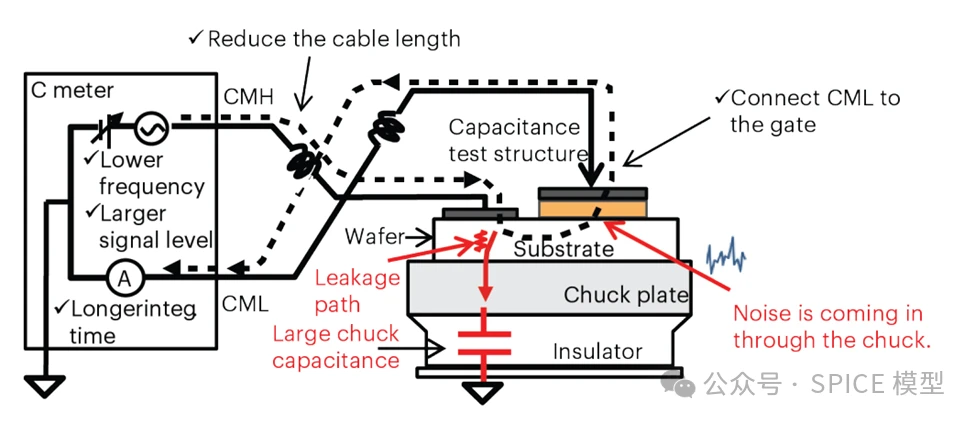 Figure 3: Schematic diagram of the On-Wafer test
Introduction to the Keysight B1500A CV module
Hardware Solutions
MFCMU Module: Multi-Frequency Capacitance Measurement Unit (Single Slot Integrated) SMU Module: Dual-channel Precision DC Bias Source SCUU+GSWU Combination: Seamless Switching of CV/IV Measurements, Routing Error <0.1%

Figure 4: Schematic diagram of the SCCUU module and circuit
Software processes
WaferPro Express operates in three steps:
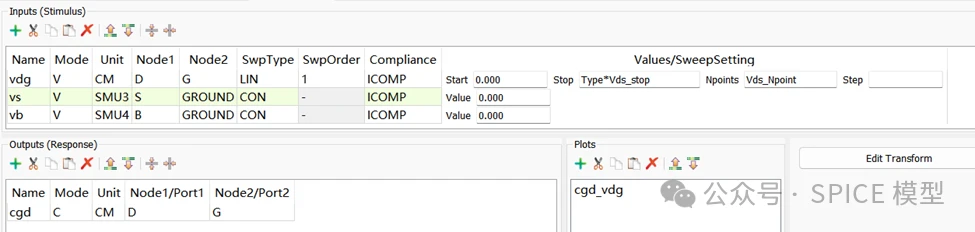
Create a test routine (define the stimulus applied on the DUT pin, there is a default routine optional), configure SMU bias (Vgs/Vds/Vbs multi-parameter linkage), set CV scan parameters (frequency/level/integration time, etc.)
MOSFET Capacitance characterization in practice
Analysis of key capacitance components
The following diagram shows the capacitance distribution in the MOSFET:

图5:MOSFET器件界面图
Cgc(Gate-channel capacitance):C4+C1+C6(含交叠电容)
Cgb(Gate-substrate capacitance):Dominant device characteristics under reverse bias
Cgg(Grid capacitance):Fully evaluate the switching speed of the device
Cgd, Cgs(Gate and drain/source level capacitors)
Drain and source-level junction capacitance
Test configuration examples
|
Test Type |
Connection Method |
WaferPro Routine Set |
|
Cgc_Vgs_Vbs |
|
|
|
Cgb_Vgb_Vdb |
|
|
|
Cgd_Vds_Vgs |
|
|
|
Cgg_Vgs_Vds |
|
|




Technology Trends
With the evolution of the third generation of semiconductor devices to high frequency and high voltage, CV measurement is facing two major upgrade directions:
Broadband measurement: Extended to high frequency bands above 100MHz, S-parameter testing is introduced. Dynamic CV Analysis: Investigate the migration of capacitive characteristics under switching transients
Send Inquiry