


【Semiconductor etching process】The soul of semiconductors teaches the etching process and the practice of engineers on defective rate problems from 0 to 1(CH9-CH10)
Sep 04, 2025
Leave a message
CH9. Wet etching process
Wet etching - mainly using the time etch method

How it works
The wafer is immersed in an etch solution or the etch solution is sprayed onto the wafer
It is widely used due to its low cost and ease of operation
Improves uniformity by heating or stirring
Etching fluids with high selection ratios are required
0021-35922 Chamber Body, Txz Mcvd
Wet etching has three stages: transport (supply), →reaction→ by-product removal (stripping) – the solution needs to be changed periodically
Mechanism
The etch fluid moves to the wafer surface by diffusion
Chemical reactions occur on the surface
By-products from etching are removed by diffusion
It is mainly used to etch oxide films, nitride films, metal films, etc
Problem
Etching at the bottom of the photoresist (PR) results in under-cuts, which has an impact on high integration
Incomplete etching
Excessive etching and excessive under-cutting
The resistor is lifted
Produces a large amount of chemical waste liquid
Pros and cons
Advantages: Batch processing / selection is better than excellent / reliability
Disadvantages: isotropic etching / large pattern size / safety issues in chemical solution treatment / need to be replaced regularly
Applications:
Surface treatment during wafer processing
Pre-treatment before thermal oxidation (for removal of organic contaminants and metal impurities)
Selective removal or stripping process for semiconductor films
Wet etching characteristics of oxide film
Etching by HF
Etching by buffered HF (BOE) (diluted with distilled water)
Reasons for adding NH₄F to BOE: Ensure a stable etch rate
Etch rate sequence: CVD oxide film > thermal oxide film
Oxide film with high concentration of impurities > Oxide film with low concentration of impurities
Wet etching characteristics of monocrystalline silicon and polysilicon
Isotropic Si etching
Solution: a mixture of nitric acid (HNO₃, silicon oxide) + hydrofluoric acid (HF, removing the oxide film formed).
Anisotropic Si etching
Solution: KOH, EDP mixture, TMAH
Although it is a wet etching, anisotropic etching can also be achieved depending on the growth surface
Wet etching characteristics of nitride films (non-important)
High temperature phosphoric acid solution / high selection ratio for oxide film
Wet etching characteristics of metals (non-important)
Aluminum: Use a heated mixed solution
Titanium: After the Self Aligned TiS₂ process, unbound areas of Ti are removed with a mixed solution
CH10. Etching defect cases and etching engineer practice
Dry etching defect cases
1)The etch rate within the wafer is uneven

Reason: Chuck temperature uniformity, gas flow, pressure, etc. are all influencing factors
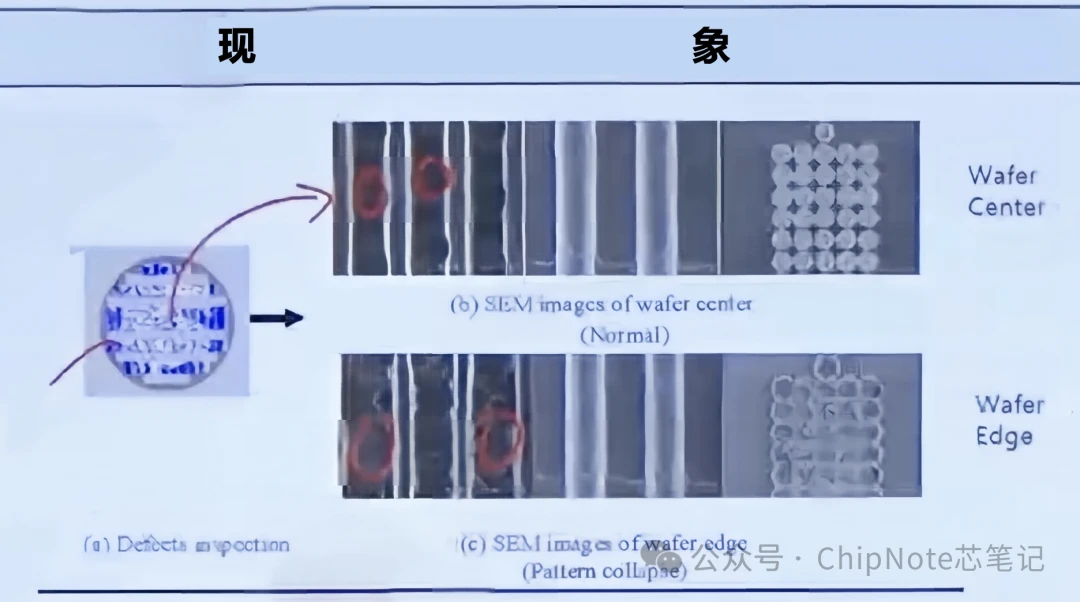
2)The figure collapses
3)Bridging caused by the mask plate
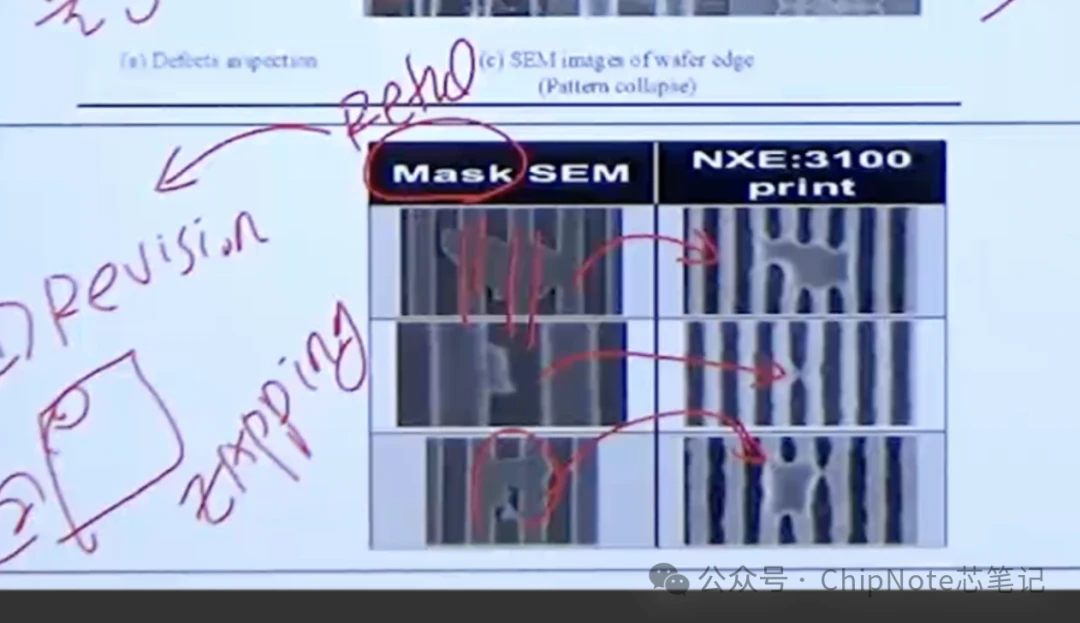
By recreating masks (Revision) or local repairs (zapping)
4)Graphic offset caused by particles
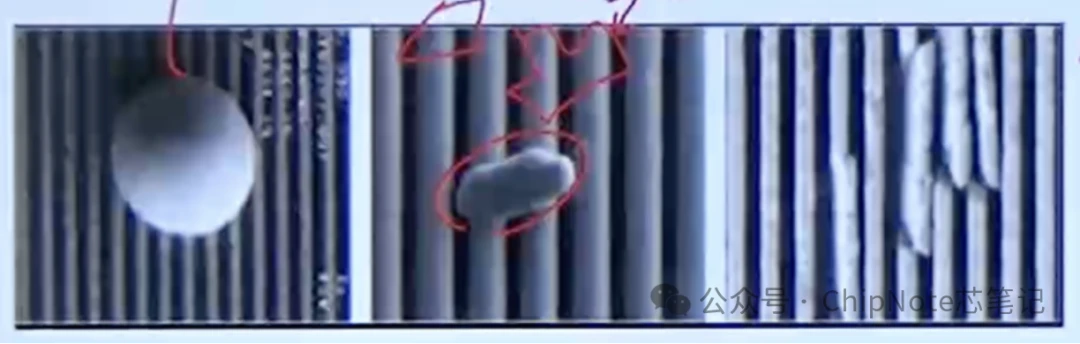
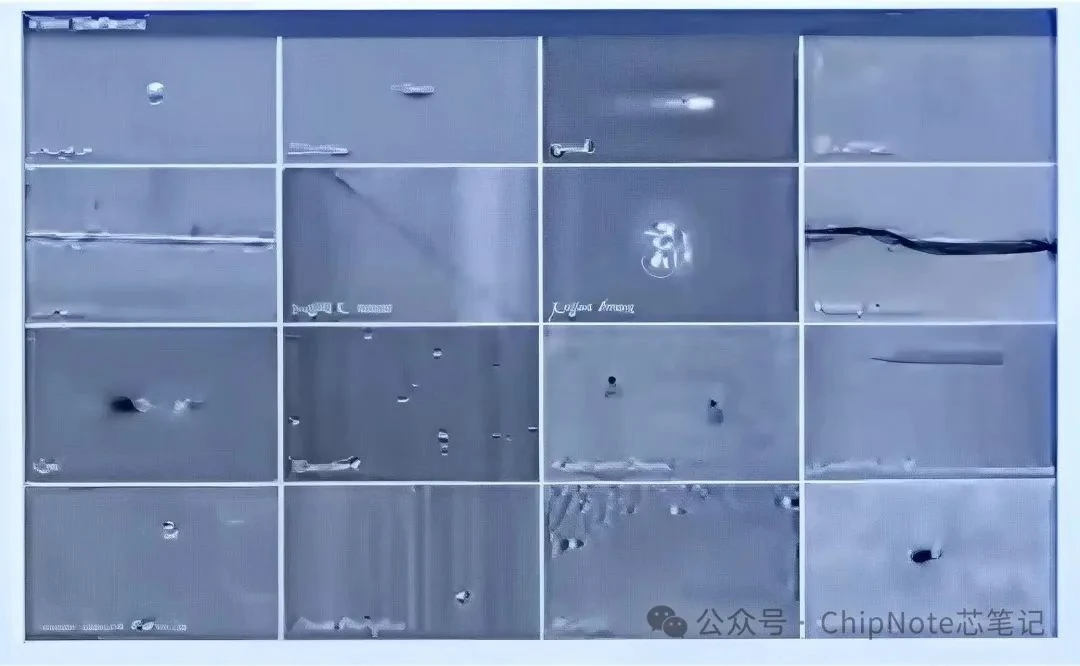
Others:scratch, particle etc
6) Contact not Open
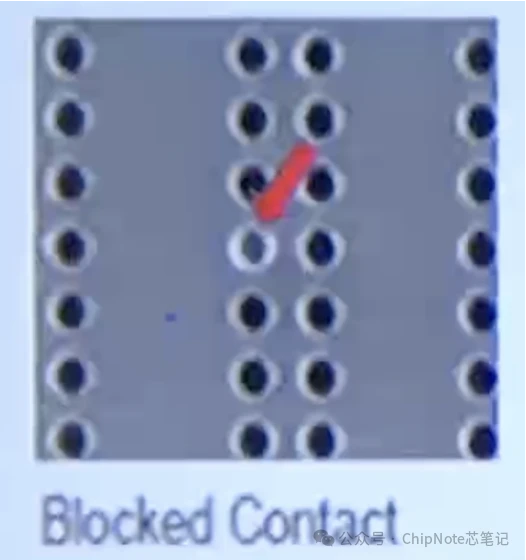
Phenomenon: etch not open / cause : particle
7) TSV ( through Si Via )
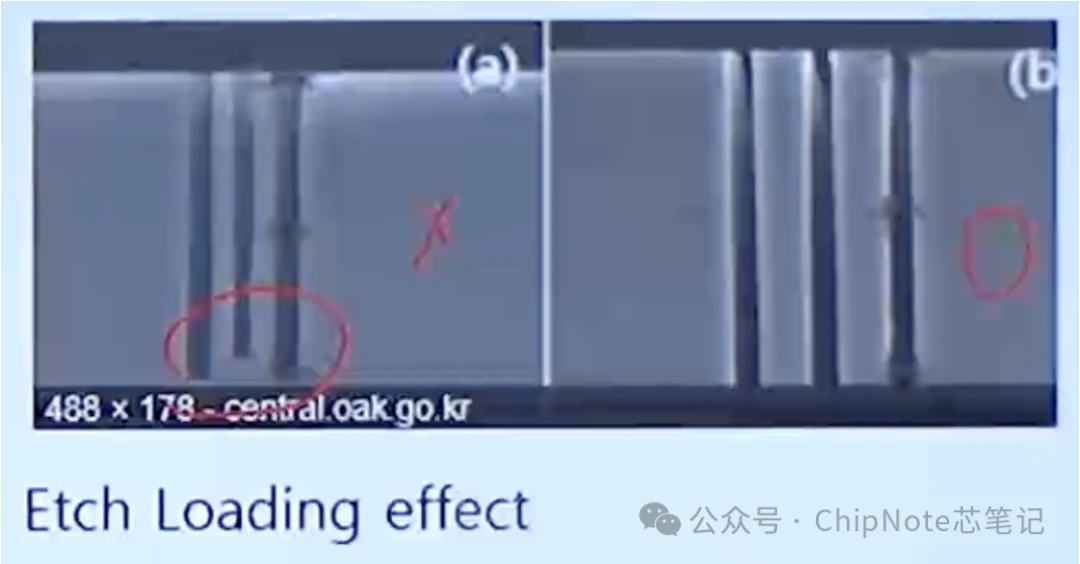
Phenomenon: contact etch depth abnormal / countermeasure: metal hard mask & air flow rate correct
8) High aspect ratio contact etch issue

Phenomenon:Bowing/ Mask Erosion/ Twisting
Cause: Distortion caused by deposition/high-energy electrons caused by electric fields
Solution: Increased high-energy electron flux → neutralization (trench bottom and sidewalls)
9)Under-engraving (in Bosch etching)

Bosch etching = accumulation of inhibitor, removal by ion bombardment, and stacking of inhibitor layer again, etch in this cycle
Solution: Reduce total cycle time while keeping the etch/deposition time ratio constant
Too high etch rate is the main cause of undercut → but if the underscore is reduced excessively, the etch rate will decrease
10)Footing(Lateral Undercut)

Under-marking due to cations building up at the bottom → "Footing"
11) Patterning defect ( metal blocked etch )
Cause: Poor etching mask formation (e.g., ADI pattern defects, particles, etc.)
Open defect

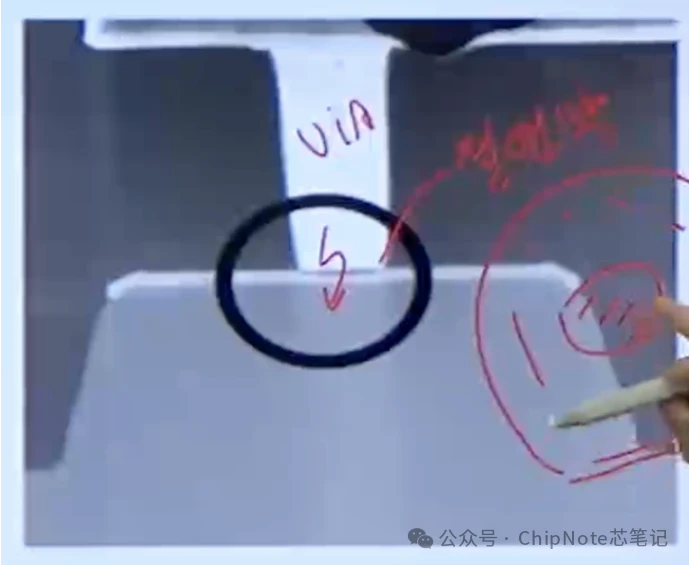
cause : etch margin insufficient, blockedparticle
• Wet Etch Bad Things
1) Polymer residue
2) Pinhole defect

Etch engineer
Field of work: Process engineer/equipment engineer
2)Process Engineer Role: Research and develop process manufacturing techniques/analysis and improve yields
3)Equipment Engineer Role: Equipment maintenance → Improve equipment operation rate → Improve production efficiency
Send Inquiry