


Chip manufacturing: ISSG process
Jun 05, 2025
Leave a message
What is the ISSG?
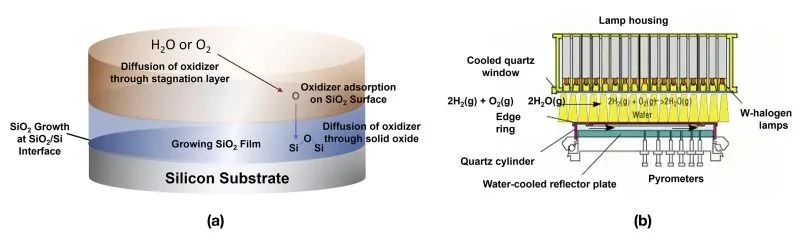
ISSG (In-Situ Steam Generation) is a high-temperature oxidation process in semiconductor manufacturing, the core principle of which is to use hydrogen (H₂) and oxygen (O₂) to directly synthesize highly active water vapor in the reaction chamber, and dissociate to generate atomic oxygen (O*) to achieve precise oxidation of silicon surface. Different from traditional furnace oxidation, ISSG is characterized by: in-situ generation: water vapor is generated directly on the surface of the wafer to avoid external contamination; Atomic-level repair: The strong oxidation of atomic oxygen can repair the suspension bond of the silicon/silica interface, and reduce the interfacial density of states to less than 10¹⁰ cm⁻² (10 times lower than the traditional process); Low-temperature breakthrough: The low-temperature ISSG developed in recent years can work below 600°C.
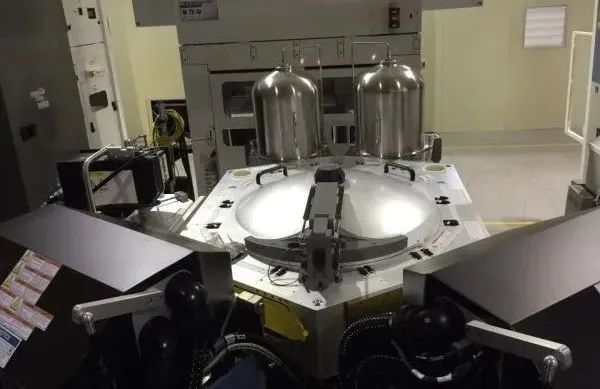
0040-02544 Upper Body, Dps Metal
the ISSG process
Pre-treatment and gas injection
After cleaning and dehydration, the wafer is sent to the reaction chamber, and a mixture of H₂ and O₂ (ratio 0.1%-99.9%) is introduced, and the flow rate is 1-100 slm/s. The air pressure is adjusted to 5.5-8 Torr (low pressure environment enhances reactivity).
High temperature activation and atomic oxygen generation
The wafer is rapidly heated to 900-1100°C, and the gas reacts under thermal catalysis:
2H₂ + O₂ → 2H₂O → 2H⁺ + O + e⁻
Highly reactive atomic oxygen is generated.
Oxide growth and thickness control
Atomic oxygen reacts with silicon substrate: Si + 2O* → SiO₂ to form an ultra-thin oxide layer of 0.5-2nm.
Dynamic pressure adjustment technology: through 5 pressure cycles (such as 6.5 Torr→ 5.5 Torr→ 6.5 Torr alternate) to compensate for the difference between the edge and center air pressure, to solve the problem of "M-type" thickness distribution of the film).
Key applications of ISSG in chip manufacturing
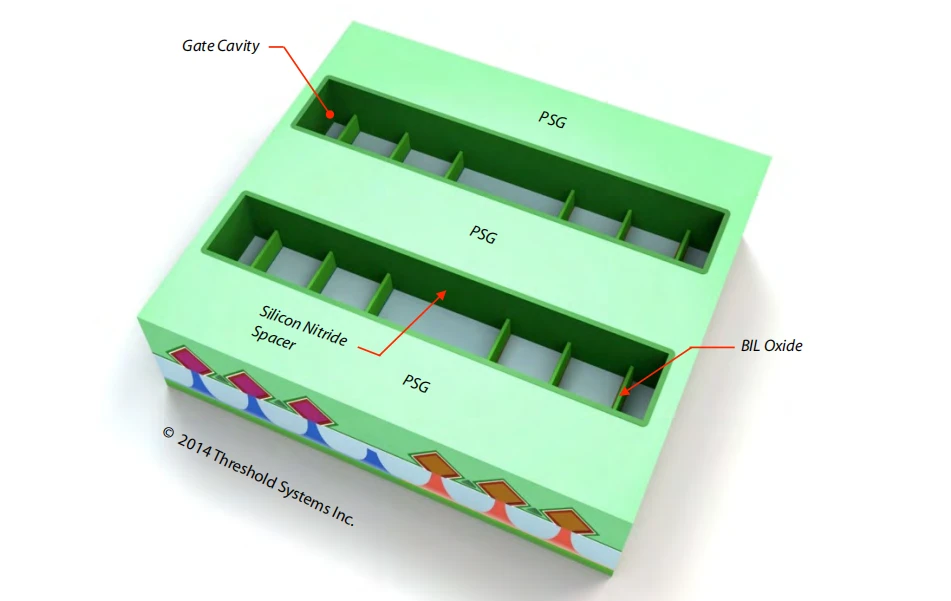
1. Gate interface layer
In the High-k Metal Gate (HKMG) process, the 0.5-1.2nm SiO₂ interface layer was grown by ISSG to optimize the interface state between HfO₂ and the silicon substrate.
Function: Reduce gate leakage current (50% reduction in leakage current at 90nm node) and improve electron mobility.
2. GAA nanostructures rounded
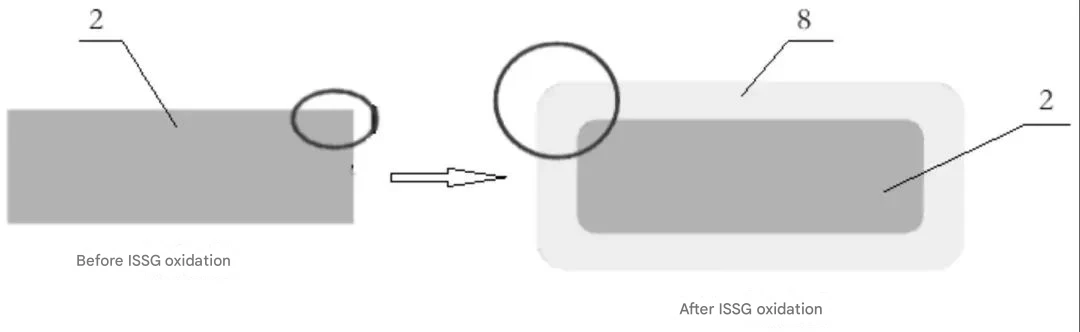
In GAA (Total Surround Gate) transistors, there are sharp corners at the edges of the nanosheets after release, causing the electric field to concentrate. Low temperature ISSG (<600°C) Modified sharp corners into rounded corners by selective oxidation.
Effect: The breakdown voltage is increased by 30% to avoid premature gate failure.
Send Inquiry