


What is the Effect of Wafer Surface Temperature on Dry Etching?
Nov 29, 2024
Leave a message
The effects of surface temperature on dry etching mainly include: polymer deposition, selectivity, photoresist flow, product volatility and etching rate, surface morphology, etching, etch
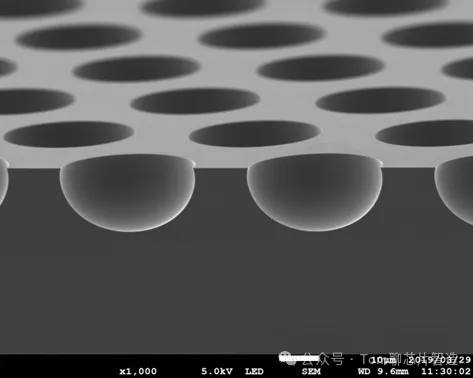
Polymer deposition: Polymers produced during the process are deposited on the surface, affecting etch rate and selectivity. Temperature affects the deposition rate and stability of polymers, with high temperatures decomposing or decreasing the deposition layers, and low temperatures increasing polymer deposition.
0021-09835 R2 Liner is an etch part.
Selectivity: The selectivity of etching materials and masking materials is very sensitive to temperature. Temperatures that are too high will reduce etch selectivity because the acceleration of the etch rate will coincide with the etching mask. Photoresist: When the photoresist flows at high temperatures, the photoresist will soften, flow and even blister, resulting in distortion of the topography.
Product volatility and etching rate: Temperature affects the volatility of by-products of chemical reactions, and by-products are more volatile at high temperatures, which helps to increase the etching rate. Low temperatures, on the other hand, lead to by-product residues and reduce etching efficiency.
Etching topography: The etching temperature is close to the glass transition temperature (Tg) of the material, and the surface topography is uniform. The etching temperature is much lower than the glass transition temperature, and the surface etching is uneven and the roughness is large.
Send Inquiry