


What Is Oxygen Precipitation In Silicon Single Crystals
Sep 10, 2024
Leave a message
What is Oxygen Precipitation in Silicon Single Crystals
0020-91291 Door Slit Liner,300mm Emax
19-024277-01 Heater,8inch,6pcs
The solubility of oxygen in silicon is 2.75×10Λ18cm-3 and in molten silicon is 2.2×10Λ18cm-3. The oxygen content in Zhizopull silicon is generally 0.5~2×10Λ18cm-3. The oxygen content in Zhizopull silicon is much higher than that in polysilicon, and its main source is the dissolution of quartz crucibles. At a high temperature of 1420°C, quartz reacts with silicon to form SiO.
Most of the SiO volatilizes on the surface of the silicon melt, while a small part (about 1%) enters the molten silicon due to the convection and diffusion of the liquid, which increases the oxygen content in the crystal. The distribution of oxygen in the crystals is high in the head and low in the tail; In the cross-section is high in the center and low in the edges.
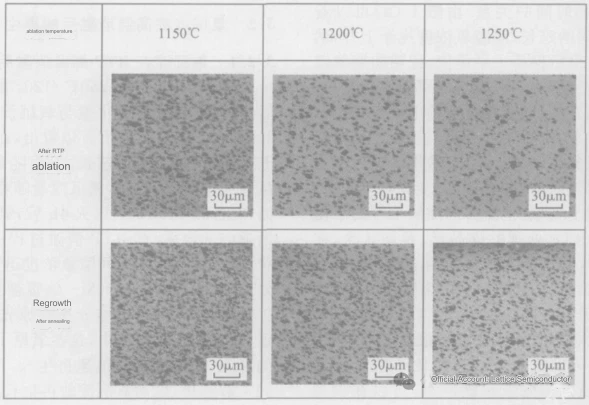
Oxygen is precipitated at high temperature or multi-step heat treatment to form oxygen lakes. The oxygen formation lake is neutral, the main component is SiOx, there is no electrical properties, and the volume is 2.25 times that of silicon atoms. When forming a lake, self-interstitial silicon atoms will be emitted from the lake formation body into the crystal, resulting in segregation due to the saturation of interstitial atoms in the silicon lattice, resulting in secondary defects such as dislocations and layer faults.
Due to the dislocation and other defects have the effect of adsorbing impurities, especially metal impurities, the process is often used to generate oxygen into a lake to adsorb impurities, so that the device manufacturing area is a clean area, so as to improve the yield and quality of the device, this process is called internal impurity absorption or intrinsic absorption process. Therefore, it is necessary to control a certain amount of oxygen concentration in silicon, and the device also requires the control of the oxygen form, so the study of the factors affecting the formation of oxygen deposition is also a very important topic. Oxygen precipitation can take different forms such as spherical, rod-shaped, and flake-shaped. The specific form depends on factors such as the concentration of impurities in the monocrystalline silicon, the temperature and time of heat treatment. The structure is generally believed that the core of oxygen precipitation is usually composed of multiple oxygen atoms, and other impurity atoms may be adsorbed around it, such as carbon atoms, nitrogen atoms, etc. As the precipitate grows, its structure may become more complex.
Positive effects of oxygen on monocrystalline silicon
· Adpurity absorption: Oxygen precipitation can act as an effective center for absorbing and trapping metal impurities, thereby improving the purity and electrical performance of monocrystalline silicon. For example, in the manufacturing of integrated circuits, the adverse effects of metal impurities on device performance can be reduced by properly controlling the formation of oxygen precipitation.
Enhanced mechanical strength: A certain degree of oxygen precipitation can increase the mechanical strength of monocrystalline silicon, making it more stable during processing and use.
Negative effects of oxygen on monocrystalline silicon
· Minority carrier lifetime: Oxygen precipitation becomes the recombination center of minority carriers, reducing the minority carrier lifetime of monocrystalline silicon. This is not good for some devices that require a high lifetime of a few carriers, such as solar cells.
Cause stress: The formation of oxygen precipitation can create stress in monocrystalline silicon, which can lead to the generation and propagation of crystal defects, affecting the quality and reliability of monocrystalline silicon.
Send Inquiry