


What is Chip Temperature Cycling Reliability Testing?
Mar 05, 2026
Leave a message
The Temperature Cycling Test (TCT) is the most core, demanding, and most common test in the Reliability Test of semiconductor packaging.
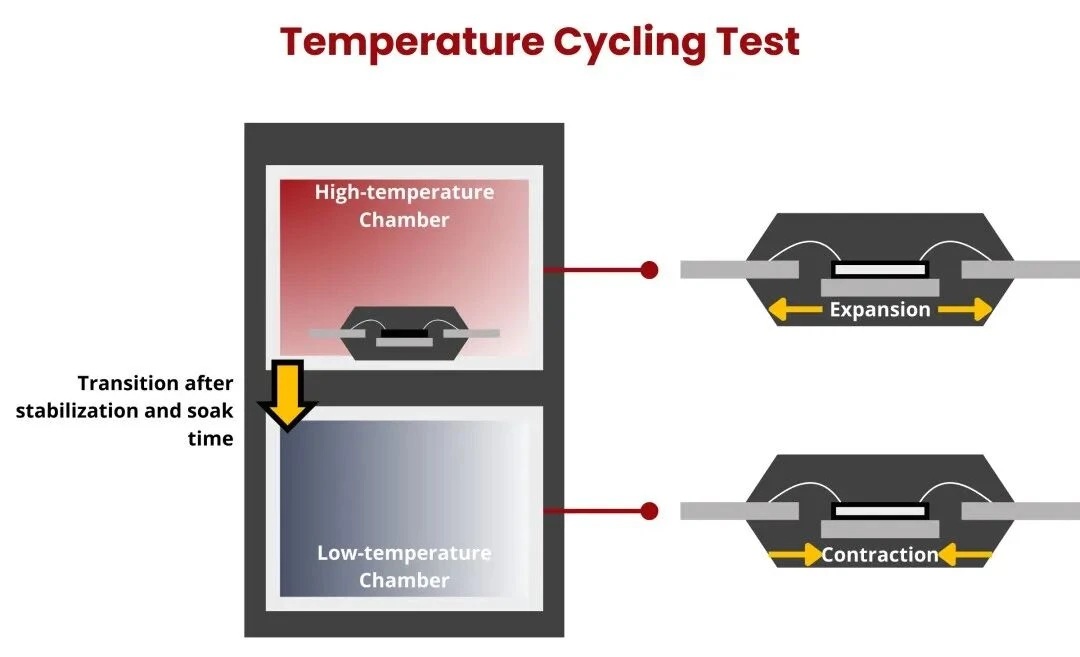
It has only one purpose: to accelerate the exposure of "thermal expansion and contraction" in the packaging structure and predict the service life of the chip by simulating the extreme hot and cold alternating environment.
What is the core principle of temperature cycling testing?
CTE mismatch, which is the physical basis of TCT testing.
The package is made up of a "sandwich" of different materials, each with a different coefficient of thermal expansion (CTE):
Silicon chip: Very hard, barely expands when heated (CTE ≈ 2.6 ppm/°C).
Organic substrates (Substrate/PCB): Expands greatly under heat (CTE ≈ 15~17 ppm/°C).
Plastic Sealant: Somewhere in between.
When the temperature changes, the substrate wants to expand/contract significantly, but the chip does not move. This causes the intermediate connected weld balls or bumps to be subjected to significant shear stress. After hundreds or thousands of repeated pulls, the welding ball will produce fatigue cracks like a wire that has been bent repeatedly, and finally break.
Test Criteria and Conditions?
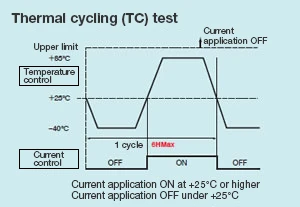
The common industry standard is JEDEC JESD22-A104.
Consumer/Industrial Grade:
Low temperature: -55°C (+0/-10);
High temperature: +125°C (+10/-0).
Condition C (Automotive/Military Grade): Low Temperature: -65°C;
High temperature: +150°C.
Send Inquiry