


Summary of the evolution of semiconductor process technology from 180nm to 14nm
Mar 12, 2026
Leave a message
Summary of the evolution of semiconductor process technology from 180nm to 14nm
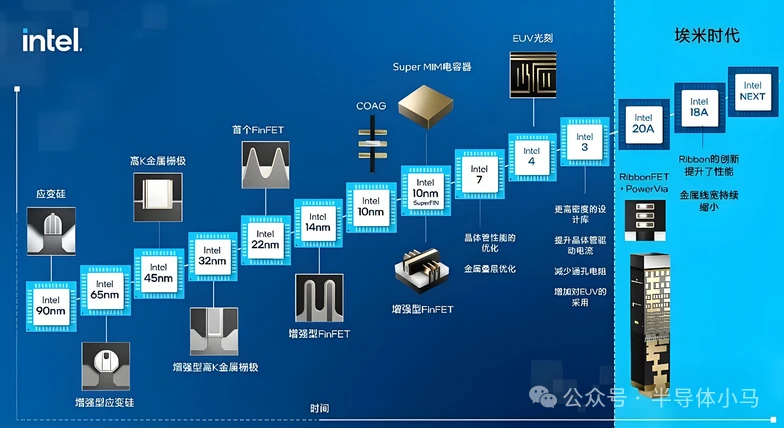
In the evolution of semiconductor processes from 180nm to 14nm, the differences in the structure of each layer are mainly reflected in device size, process technology, material selection and complexity.
Mask Layers
180nm-90nm: The number of lithography layers is about 20-30, mainly including the transistor gate, source-drain area, contact hole and metal interconnect layer (Metal 1-3).
65nm-45nm: Increase the number of layers to 30-40 layers, introduce shallow trench isolation (STI), stress engineering, and more metal layers (e.g., Metal 4-5).
28nm-14nm: The number of layers exceeds 50, and complex processes such as high-K metal gates (HKMG), self-aligning double patterns (SADP), and FinFET structures are added, and the metal layers are expanded to 7-10 layers.
Key layer technical differences
1)Gate
180nm-90nm:Polysilicon gate pole SiO₂ gate oxygen, gate length 180nm→90nm.
65nm-45nm:High K dielectric (such as HfO₂) replaces SiO₂ and reduces leakage current; Metal gates began to be introduced.
28nm:High K metal gates (HKMG) are fully applied to improve gate control capabilities.
14nm:FinFETs (fin field-effect transistors) replace planar structures, and the 3D gate significantly reduces the short channel effect.
|
Process nodes |
Gate structure |
|
180nm |
Polysilicon gate + SiO₂ gate oxygen |
|
90nm |
Polysilicon gate + Thin SiO₂/SiON |
|
65nm |
High K medium (HfO₂) pilot |
|
45nm |
High K / Metal Gate (HKMG) transition |
|
28nm |
High K/Metal Gate (HKMG) is fully applied |
|
14nm |
FinFET (3D Fin Structure) |
2)Isolation technology
180nm-90nm: Mainly local oxidation isolation (LOCOS), large size.
65nm and below: Shallow trench isolation (STI) has become mainstream, with better isolation and a smaller footprint.
|
Process nodes |
Isolation technology |
|
180nm |
Local Oxidation Isolation (LOCOS) |
|
90nm |
Shallow Trench Isolation (STI) |
|
65nm |
STI Optimized |
|
45nm |
Strain silicon technology |
|
28nm |
Strain engineering optimization |
|
14nm |
STI size is miniature |
3)Interconnect
180nm-90nm: Aluminum interconnect SiO₂ medium with fewer layers (typically 3-4 layers).
65nm-45nm: Copper interconnects fully replace aluminum, low-K media (such as SiOC) reduce parasitic capacitance, and metal layers increase to 5-6 layers.
28nm-14nm: Ultra-low K medium (k<2.5) and Damascus process optimized signal transmission with 7-10 metal layers.
|
Process nodes |
Interconnect materials |
Media material |
|
180nm |
Aluminum (Al) interconnect |
SiO₂(k≈4.0) |
|
90nm |
Copper (Cu) interconnection pilot |
SiO₂(k≈4.0) |
|
65nm |
Copper interconnect is fully applied |
Low K media(k≈3.0-3.5) |
|
45nm |
Copper interconnect + low K media |
Low K media(k≈2.7-3.0) |
|
28nm |
Copper interconnect + ultra-low K media |
Super Low K media(k≈2.5) |
|
14nm |
Copper interconnect + ultra-low K media |
Super Low K media(k<2.5) |
4)Source/Drain
180nm-90nm: Lightly doped leakage (LDD) structure, formed by ion implantation.
65nm-45nm: Stress engineering (e.g., SiGe stress layer) improves carrier mobility.
28nm-14nm: Embedded SiGe (eSiGe) source-drainage and ultra-shallow junction technology further optimize performance.
|
Process nodes |
Source leakage engineering |
|
180nm |
Light Doped Leak (LDD) |
|
90nm |
Shallow junction + stress engineering (SiGe strain) |
|
65nm |
Embedded SiGe(eSiGe)Source Drain |
|
45nm |
Super shallow knot(USJ) + NiSi silicide |
|
28nm |
raised S/D + High mobility channels |
|
14nm |
Fin Source Leak + Contact Optimization |
Process complexity and new technologies
90nm-65nm:Immersion Lithography,improve Lithography resolution.
45nm-28nm:Dual patterning technology (DPT) solves the problem of lithography limits, and FinFETs are being developed at the 28nm node.
14nm:FinFET mass production, self-alignment quadruple pattern (SAQP) to achieve smaller line widths, EUV lithography technology began to be initially applied.
|
Process nodes |
Patterning technology |
|
180nm |
Single-layer lithography |
|
90nm |
Single-layer lithography |
|
65nm |
Double exposure (DP) prototype |
|
45nm |
Self-Aligning Double Pattern (SADP) |
|
28nm |
Quadruple pattern (SAQP)/EUV pilot |
|
14nm |
EUV (Partial Tier) + SAQP |
VI.Comparison of key process innovations
|
Process nodes |
Core technology breakthrough |
Representative craftsmanship |
Material innovation |
|
180nm |
Standard CMOS process |
Aluminum interconnect + LOCOS |
SiO₂Grid oxygen |
|
90nm |
Strain Silicon + Immersive Lithography |
Copper interconnect + STI |
SiON Fence medium |
|
65nm |
High K / Metal Grating Pilot + Low K Media |
Double exposure lithography |
Hf Basis height K media |
|
45nm |
HKMG Comprehensive Application + Stress Engineering |
SADP Patterning |
The second generation of high K materials |
|
28nm |
Planar HKMG Extreme + 3D FinFET R&D |
SAQP/EUV Pilot |
Ultra-low K media(porous SiOCH) |
|
14nm |
FinFET Mass Production + EUV Lithography |
3D device fabrication + high NA EUV |
3rd generation high K material + strain engineering optimization |
V. Typical application scenarios
180nm-90nm: consumer electronics, simple microcontrollers, analog circuits.
65nm-45nm: Smartphone baseband, mid-range processor, IoT chip. 28nm: high-performance computing, mobile devices (such as early Snapdragon, Kirin chips).
14nm: High-end processors (such as Intel Core, AMD Ryzen, Apple A9/A10), AI chips.
Send Inquiry