


High-purity Silicon Powder to Prepare Silicon Nitride Ceramics
May 06, 2025
Leave a message
Silicon nitride ceramics have excellent properties such as high hardness, high mechanical strength, high temperature resistance, good thermal stability, low dielectric constant and dielectric loss, wear resistance, corrosion resistance, etc., and are ceramic materials with excellent comprehensive properties.
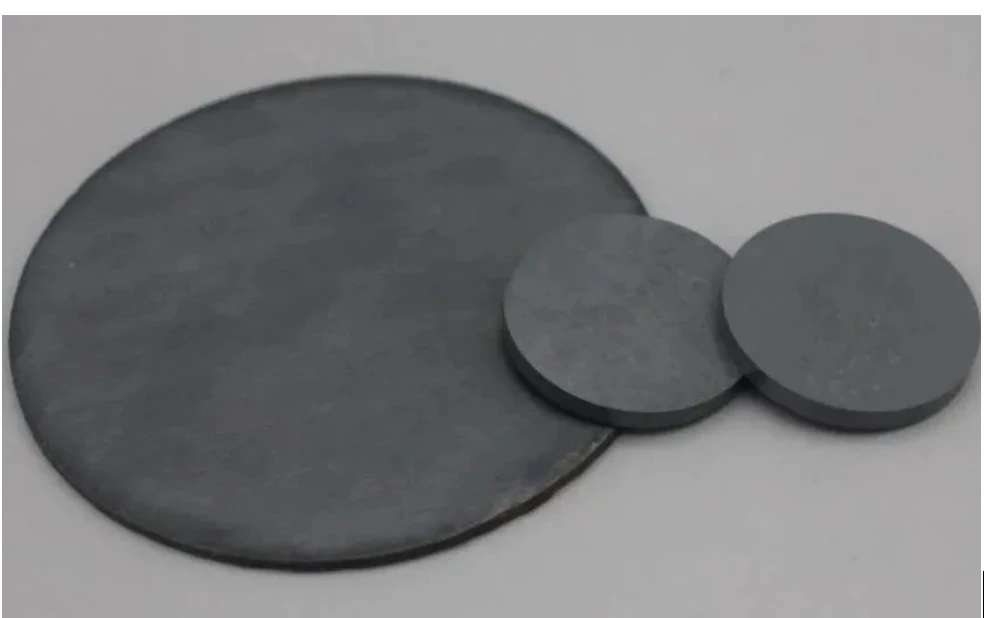
High-purity silicon powder is one of the main raw materials for the preparation of silicon nitride ceramics, and its purity and particle size have a key impact on the performance of silicon nitride ceramics. High-purity silica fumes can reduce the adverse effects of impurities on ceramic properties, while a suitable particle size distribution can help improve reactivity and density of ceramics.
0040-77771 DPS ESC
Preparation process
Silicon powder nitriding: In the nitrogen environment, the high-purity silicon powder is put into a high-temperature reaction furnace, and the silicon powder reacts with nitrogen to produce silicon nitride, and the chemical reaction equation is 3Si + 2N2 = Si3N4. Generally, the content of Fe, O, Ca and other impurities in the silicon powder is less than 2%, and the heating temperature is about 1400 °C. The a-Si3N4 content is high at 1200 - 1300°C, but the product is coarse, and usually needs to be crushed-ground and other post-processing to produce high-quality silicon nitride ultrafine powder. In order to avoid contamination by impurities, silicon nitride ceramic parts can be used instead of metal mechanical parts in the parts that come into contact with silicon nitride powder in the crushing and grinding equipment.
Molding: There are many common ways to mold silicon nitride ceramics, such as cast molding. First, the dispersant ball mill is added to the ceramic powder to make the solvent wet the powder and avoid particle agglomeration; Then binders and plasticizers are added to obtain a stable and uniform slurry through secondary ball milling; Then the slurry is vacuum deaerated to obtain a slurry with suitable viscosity; After filtration and static aging, the slurry is more stable; Finally, it is cast into a flat plain film with a certain area through a casting machine, and a thick film green blank is obtained after drying.
Sintering: Silicon nitride ceramics are typically sintered in the liquid phase to prepare dense ceramics. Common sintering methods include pneumatic sintering (GPS) and so on. Pneumatic sintering is to sinter silicon nitride blanks in nitrogen gas at 5 - 12 MPa at 1800 - 2100 °C. Applying high nitrogen pressure can inhibit the decomposition of silicon nitride at high temperature, increase the sintering temperature, promote the densification of the material, and help to select the sintering agent that can form a high refractory intergranular phase to improve the high-temperature performance of the material.
Performance characteristics of silicon carbide ceramics
Silicon carbide ceramics have the characteristics of high hardness, high wear resistance, high thermal conductivity, high temperature resistance, oxidation resistance and good chemical stability, and are widely used in high-temperature structural materials, wear-resistant materials, heat exchangers and other fields.
The role of high-purity silica fume
After mixing high-purity silicon powder with carbon powder as raw material, silicon powder provides silicon elements in the reaction, and reacts with carbon to form silicon carbide, whose purity and particle size affect the phase composition, microstructure and properties of silicon carbide ceramics.
Preparation process
Raw material mixing: Mix high-purity silicon powder and toner powder thoroughly according to a certain ratio. In order to ensure the uniformity of mixing, ball milling and other methods can be used for mixing, so that the silicon powder and carbon powder can be in close contact, creating good conditions for the subsequent reaction.
Reaction synthesis: The mixed raw materials are put into a high-temperature furnace for reaction, and the reaction temperature is usually 1600 - 2000 °C. At high temperatures, silicon fume reacts chemically with toner to form silicon carbide. In this process, process parameters such as temperature and holding time need to be precisely controlled to ensure that the reaction is fully carried out and the ideal silicon carbide phase composition and microstructure are obtained.
Forming and sintering: After the reaction of silicon carbide products are crushed, they can be made into the desired shape by dry press molding, isostatic press molding and other methods. Then high-temperature sintering, such as pressureless sintering, hot-pressed sintering, etc. The sintering process can further improve the density and performance of silicon carbide ceramics to meet the requirements of practical applications.
Send Inquiry