


Factors Influencing Film Stress in PECVD
Feb 11, 2025
Leave a message
What are the factors that affect the stress of PECVD films? What are the advantages and disadvantages of each?
Taking SiH4+NH3/N2 to form SiNx thin films, and SiH4+NH3+NO2 to produce SiON thin films, I have summarized a few points here, of course, not limited to these factors: temperature, power/pressure, gas composition, frequency, and the content of the diluted gas He.
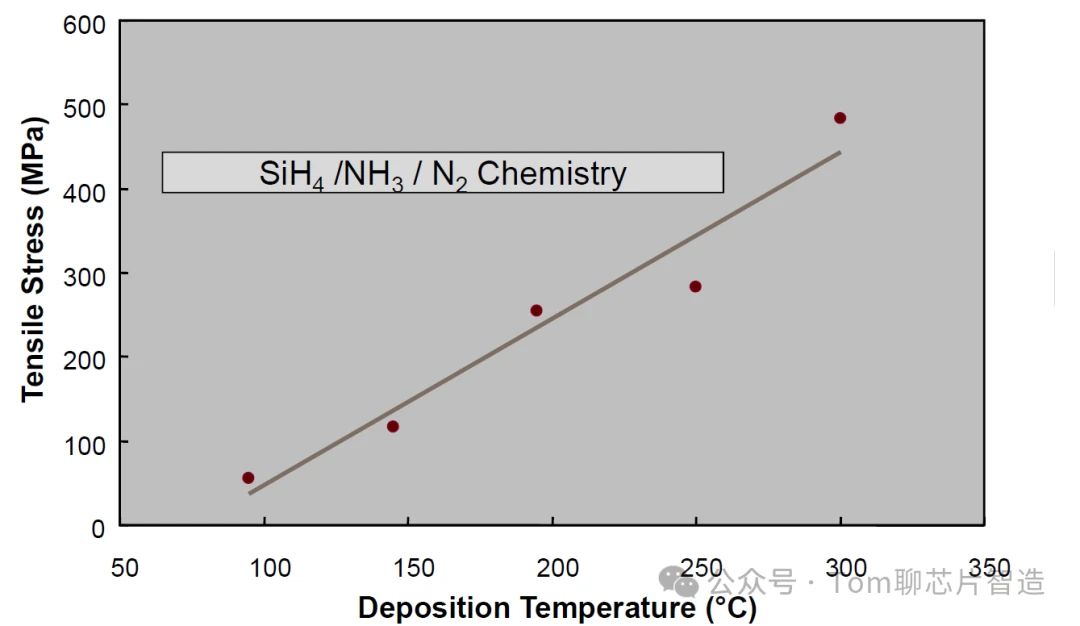
Temperature (SiNx film)
The higher the temperature, the greater the tensile stress.
0010-37264 Cooldown Chamber Multi Slot Ass'y
Power/Pressure (SiNx Film)
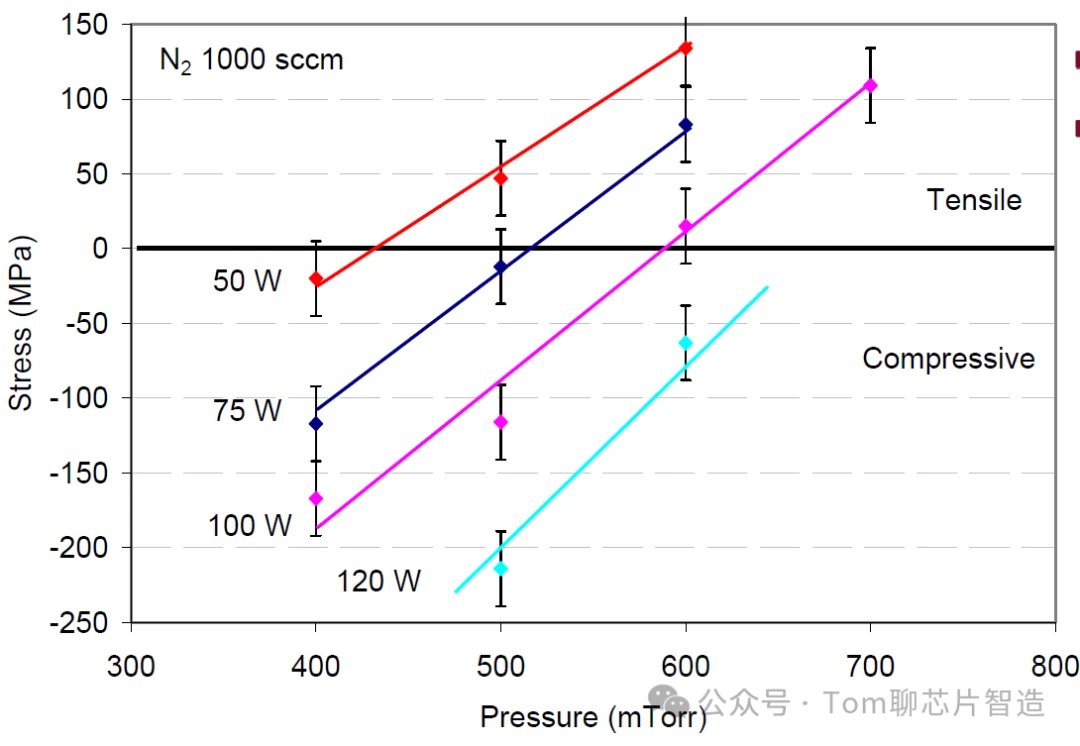
As shown in the figure above, at lower pressures (400 mTorr), the stresses at all power conditions are biased towards compressive stress; As the pressure increases, the compressive stress gradually changes to tensile stress; At higher pressures (600-700 mTorr), the stresses tend to tensile stresses. The positive and negative pressures in the diagram represent tensile and tensile stresses, respectively. Types and proportions of gases (SiON films)
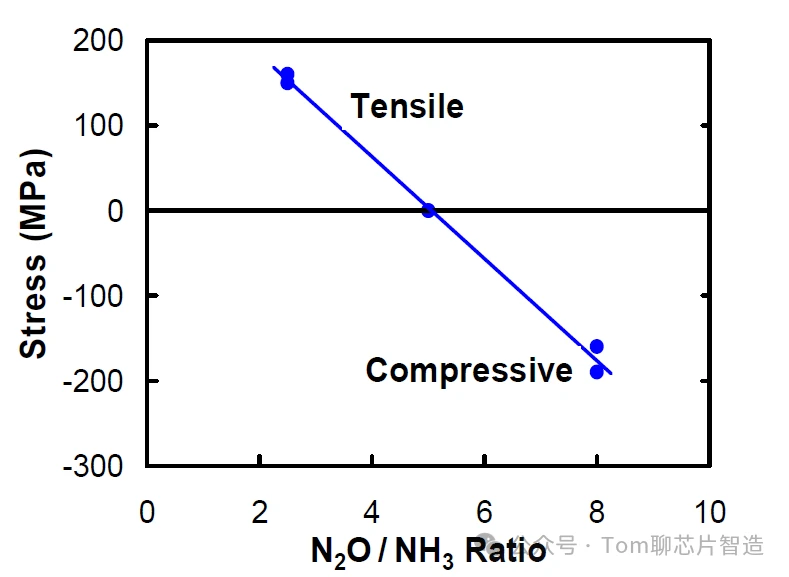
As shown in the figure above, as the ratio of N2O/NH3 increases, the film gradually changes from tensile stress to compressive stress. Low Frequency Modulation (SiNx Films)
0040-22451 Pedestal 150mm Cooldown, 3 point contact
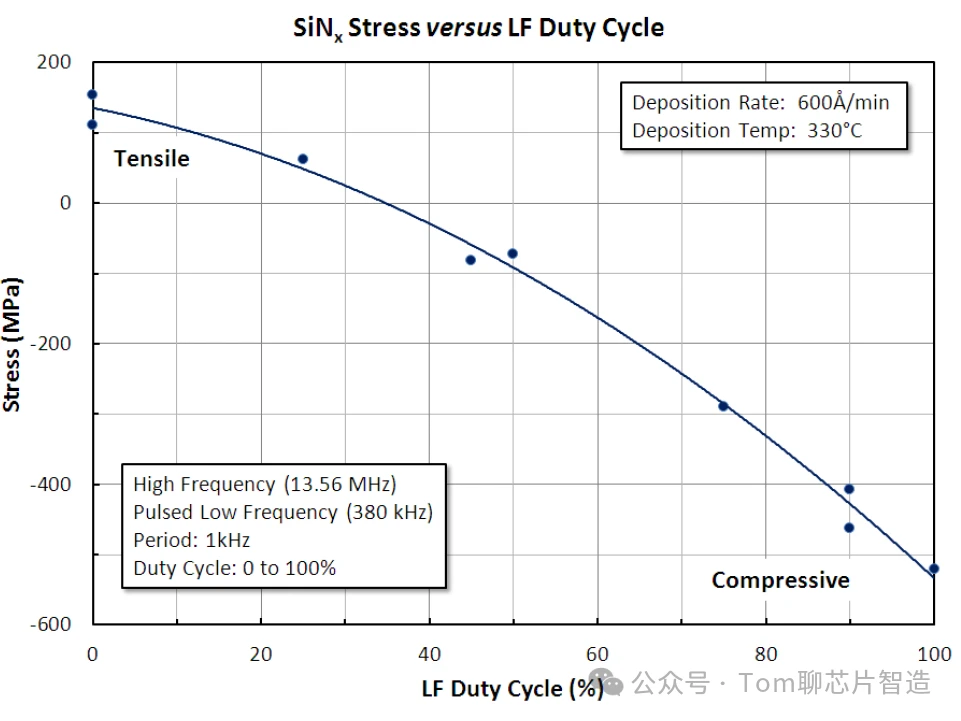
As shown in the figure above, the stress of the film gradually changes from tensile stress to compressive stress as the proportion of time spent on the output of the power supply at low frequencies increases. The content of the diluted gas He
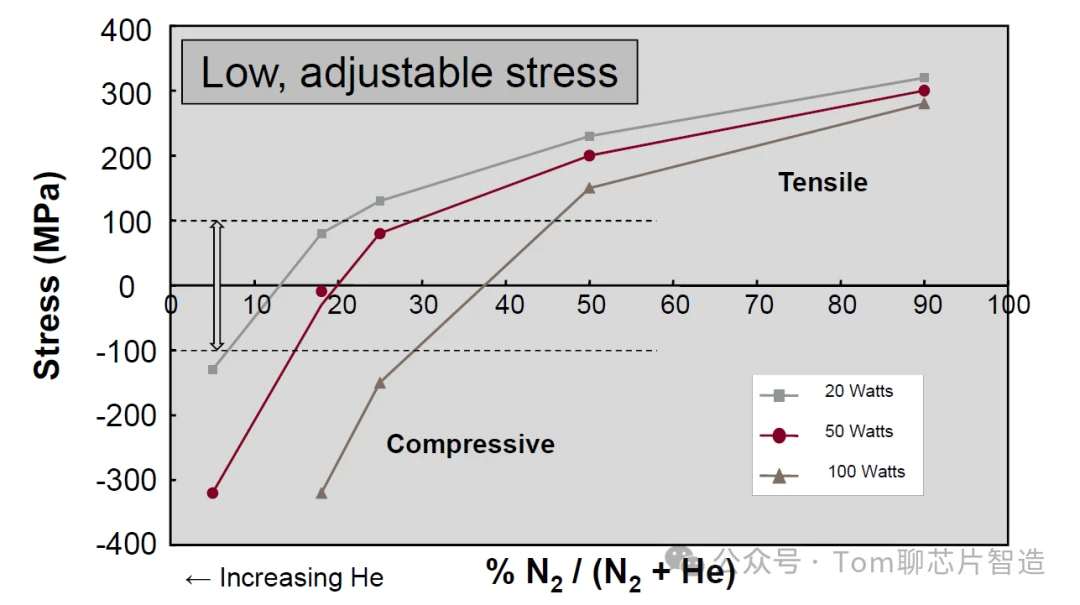
As shown in the figure above, when the proportion of diluted gas He gradually increases, the stress of the film gradually changes from tensile stress to compressive stress. Therefore, the adjustment of the film process often needs to be adjusted to an optimal value, and any process parameters that are too large or too small will cause imperfect film quality.
END
Send Inquiry