


Cu-Cu Hybrid Bonding Principle
Feb 25, 2025
Leave a message
What is Cu-Cu hybrid bonding?
Traditional solder ball flip bonding usually requires the process of metal melting and solidification, but copper-copper hybrid bonding adopts solid-state bonding, and at high temperatures, the atoms of copper metal diffuse in the solid state to form a strong connection, avoiding the "bridging" problem caused by metal melting and ensuring the reliability of the bond.
0010-20252 Wafer Rotation Assy
Cu-Cu hybrid bonding principle
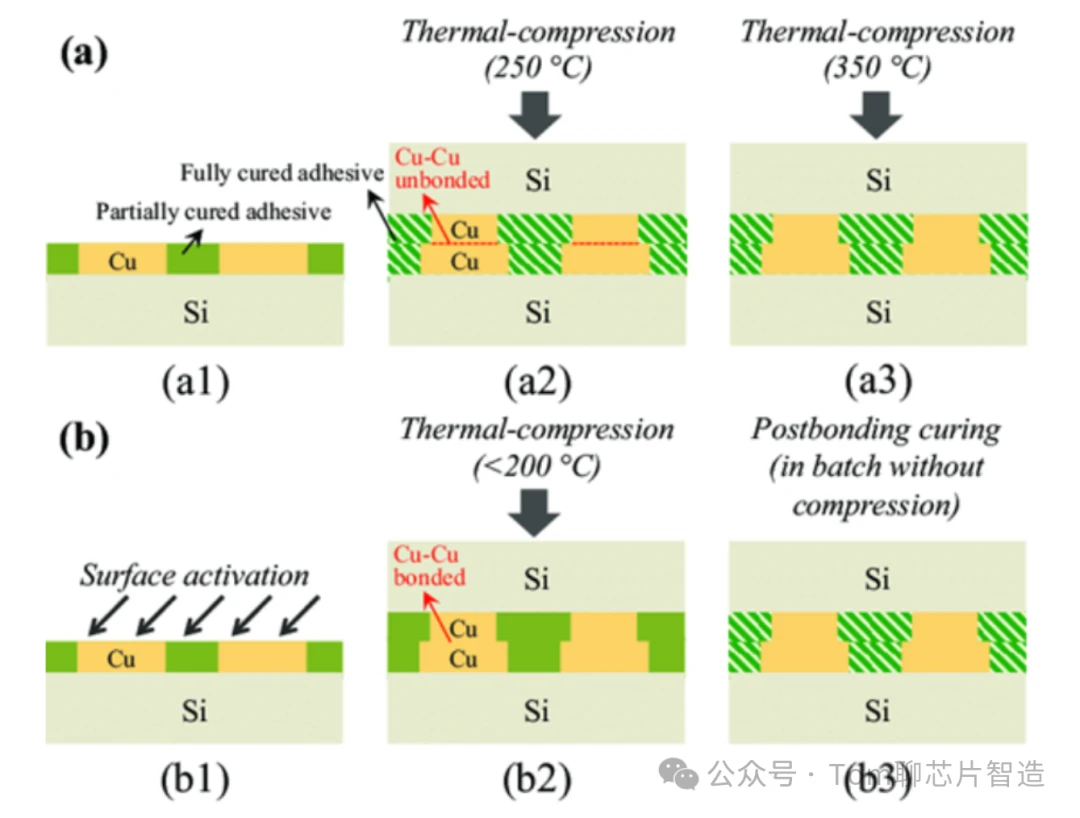
1,Choose two wafers that contain both SiO₂ dielectric and copper contacts, which are typically slightly thicker than SiO₂. Plasma is often used to clean the surface and enhance adhesion between materials.
2,The two processed wafers will be aligned at room temperature. Due to the van der Waals force between the silicon oxides, the two wafers have developed a certain bond strength. This bonding force is not high, but it is enough for the two wafers to maintain initial contact.
3,The bonded wafer is heated at 100°C to form a strong covalent bond, which results in a stronger bond between the silicon oxide bonding surfaces.
4,Next, the temperature rises to 300°C to 400°C, and since the coefficient of thermal expansion of copper is greater than SiO₂, the volume of copper expands violently, eventually causing copper on two wafers to come into contact with each other and diffuse into each other at high temperatures, thus achieving copper-to-copper bonding.
The source of the Cu-cu hybrid bonding problem
The planarization of the wafer is insufficient, the surface of the wafer is not cleaned, there are particle residues, alignment errors, and holes in the Cu metal interface.
Which chip products are used for wafer to wafer Cu-Cu hybrid bonding?
It can be used in CIS, 3D NAND and other products.
Send Inquiry