


Chip Fabrication: Step Coverage of SiO2 Silica Deposition
Nov 25, 2025
Leave a message
In the microscopic world of chip manufacturing, silica films are like nanoscale coatings on silicon wafers. However, the coverage of this coat varies greatly depending on the deposition method – from uniform and perfect conformal coverage to selective deposition of uneven thickness.
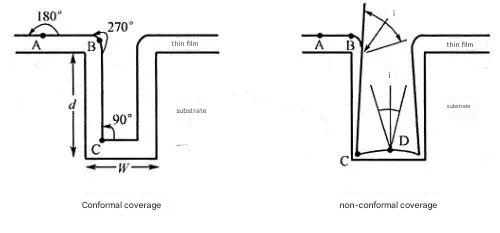
Basic principles of molecular motion and step coverage
In a low-pressure environment, the movement of gas molecules follows the law of average free path. When the reaction chamber pressure decreases, the collisions between the molecules decrease, and they fly in a more direct path towards the wafer surface. This linear flight characteristic allows low-pressure deposition to have better step coverage because the molecules are able to penetrate deep into the bottom and side walls of the microstructure.
Surface mobility is another critical factor. When the reactant molecules reach the surface of the wafer, those molecules with sufficient energy diffuse on the surface in search of suitable reaction sites. The high surface mobility allows molecules to move from the edge of the protruding step to the recessed sidewall, allowing for a more uniform film distribution.
The reaction mechanism determines the selectivity of the deposition process. Some precursors only decompose the reaction under specific conditions, which leads to differences in deposition rates across different surface topology.
TEOS SiO2
The process of decomposition and deposition of silica by ethyl orthosilicate (TEOS) at high temperatures demonstrates excellent step coverage. TEOS molecules are relatively large and maintain high surface mobility after reaching the wafer surface under typical LPCVD process conditions (pressure 0.1-1 Torr, temperature 650-750°C).
TEOS molecules have high surface migration: molecules diffuse along the surface under heat drive, independent of the initial incident location. They are able to migrate from the top of the raised steps to the recessed sidewalls, ultimately achieving near-perfect uniform coverage over the entire 3D structural surface. This property makes TEOS particularly suitable for deep hole filling with a depth aspect ratio of more than 5:1.
However, the TEOS process requires relatively high temperatures, which is a limiting factor in some heat-sensitive applications.
At the same time, TEOS decomposition produces organic byproducts such as ethanol, which may affect the purity and electrical properties of the film.

0040-01973 REV.004 CHAMBER BOTTOM RADIANCE 200MM RTPw
Silane and laughing gas SiO2
The SiH₄ + N₂O reaction system exhibits completely different deposition characteristics. In a typical PECVD process (pressure 1-10 Torr, temperature 300-400°C), silane reacts rapidly with laughing gas under plasma activation.
The deposition process of this system is fast: the reactant molecules react quickly in the gas phase or on the surface, and the molecules are fixed before they have enough migration on the surface. The result is a faster deposition at the top and bottom edges of the steps and slower on the side walls, resulting in a noticeable difference in thickness.
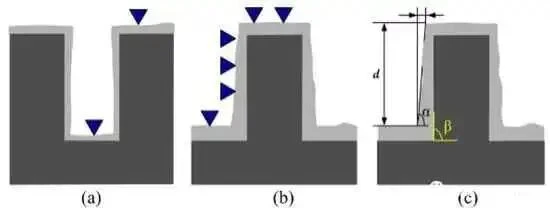
Unique personalities of other precursor systems
Ethylsilane (Si₂H₆) and oxygen systems offer an alternative. Ethylsilanes have higher reactivity than monosilanes and are able to achieve deposition at lower temperatures. Its molecular structure allows for different equilibriums between surface migration and reactivity, resulting in step coverage properties between TEOS and silane.
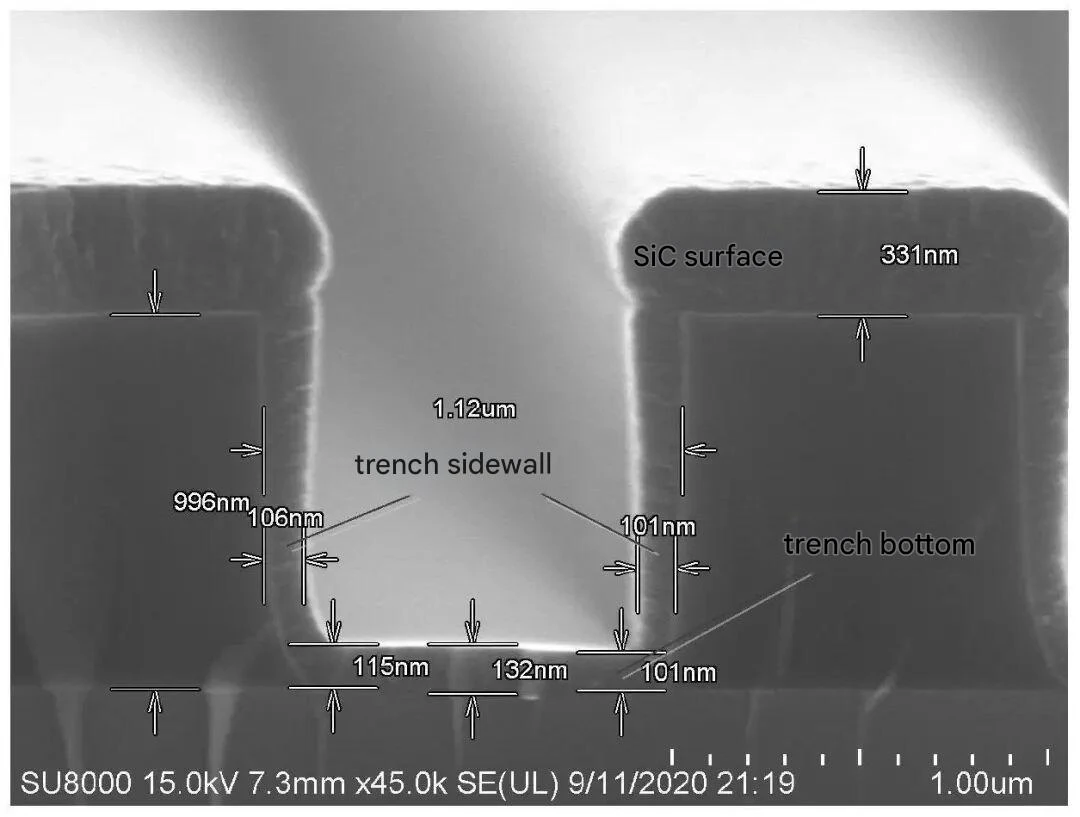
715-031986-005 Hsg Lwr Reaction Chamber
Regulation of process parameters
In addition to precursor selection, process parameters also have a decisive influence on step coverage. Pressure regulation can change the average free path of molecules: low pressure promotes straight flight and improves coverage inside deep pores; Appropriate pressure can enhance the gas phase reaction and change the deposition characteristics.
Temperature control directly affects surface mobility. At higher temperatures, the molecule activity on the surface is enhanced, which is conducive to conformal coverage.
Plasma power not only activates reactions in PECVD, but also affects surface migration and film stress, requiring precise balancing.
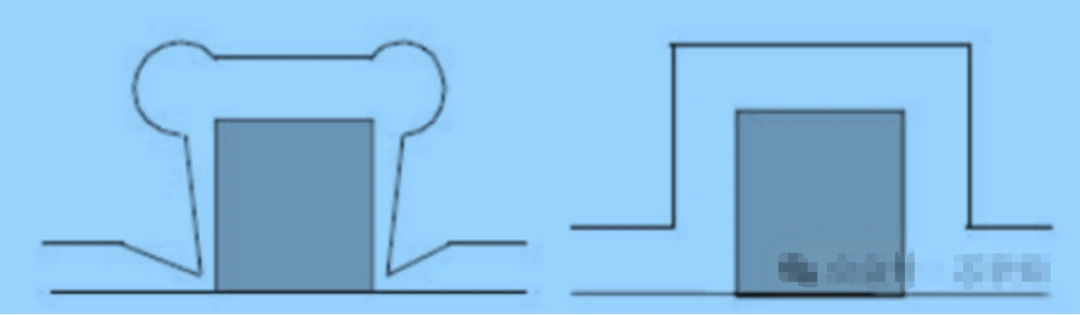
Send Inquiry