


TSMC Is In The United States, It's Too Hard
Dec 02, 2024
Leave a message
TSMC is in the United States, it's too hard
When a headhunter called Matthias Cooper four years ago to offer an offer, he couldn't believe his luck: TSMC, a Taiwanese semiconductor manufacturing company planning to build a state-of-the-art factory in Arizona, needed engineers. Will he be interested? "This is a once-in-a-lifetime opportunity," the 33-year-old said in an interview at a café in the suburbs of Phoenix in October.
Cooper, a muscular man with a big beard, chose to sit on the patio so he wouldn't be heard, despite the temperature reaching 86 degrees Fahrenheit (30 degrees Celsius). For him, being interviewed by journalists is a risky business; He signed a non-disclosure agreement disclosing his tenure at TSMC. In this article, "Cooper" is not his real name.
His resume is impressive. After graduating from high school, he joined the U.S. Navy and was tasked with maintaining nuclear reactors – a job that required extreme precision. An accident left him with leg injuries and confined to a wheelchair for months. Many doubted that he would ever be able to walk again. Cooper decided to pursue an education funded by the military. He studied at a community college and then transferred to a prestigious university, where he completed his four-year engineering degree in just two and a half years, graduating magna laude. He also learned to walk again.
TSMC's phone call seemed to herald another piece of good luck. The job is tempting. He will have the opportunity to live and work in Taiwan for a year before returning to Arizona to operate cutting-edge semiconductor manufacturing equipment. In the spring of 2021, Cooper flew to Taipei with 300 other American recruits, with more to follow. His family also came. The group was training at TSMC's headquarters while a new factory was erected in the desert of Phoenix.
But the dream job quickly turned into a nightmare. Cooper faced discrimination and bullying, and safety issues in the workplace were neglected. Even now, he weeps when he recalls it. "I was very worried about my safety. It was a stressful time for my family," he recalls. His career ended after he reported a dangerous incident to top management – a move that ended his tenure with the company.
Chip giants are rooted in the United States
TSMC is the world's leading semiconductor manufacturer. Its tiny, high-performance processors power everything from smartphones in our pockets to military missile systems and satellites orbiting the Earth. TSMC is also driving the AI revolution. It produces chips necessary for companies such as Qualcomm, Google, and OpenAI to perform complex AI calculations. Nvidia, one of TSMC's largest customers, is responsible for designing the chips, but they are manufactured in TSMC's state-of-the-art facility.
The Taiwanese company outperformed almost all of its competitors, producing 90% of the world's high-performance chips. It is one of the companies that most consumers have never heard of, despite the fact that they use its products on a daily basis. Without TSMC, our daily lives would be very different.
Apple in particular relies heavily on TSMC. While the iPhone's key components were designed in California and assembled in China, the device's core chip can only be made in Taiwan. According to Chris Miller, author of the book "Chip Wars," no other company has the expertise or ability to produce these chips.
In 2020, TSMC shocked the industry by announcing plans to produce high-performance chips in Arizona, USA. The decision was hailed as a landmark moment. As the birthplace of semiconductor chips, the United States has finally brought chip manufacturing back to the United States. The move was also seen as a step towards reducing the U.S. dependence on a Taiwanese company. The Biden administration has pledged billions of dollars in subsidies to support the program.
However, four years on, TSMC's expansion in Phoenix faces significant challenges. The opening of the factory has been repeatedly delayed, unions have issued warnings for safety violations, and former employees have filed serious charges. They claim that TSMC systematically discriminates against American workers and favors hundreds of Taiwanese employees who have flown in from the United States.Interviews with former TSMC employees and industry experts in the Neue Zürcher Zeitung reveal the complexities of TSMC's U.S. operations and how its woes will affect the global chip industry.
Zhang Zhongmou's rapid rise
The story of TSMC began in the United States. In 1949, Zhang Zhongmou, a young man from China, came to Boston to study engineering at the prestigious Massachusetts Institute of Technology. After graduating, he began his career at Texas Instruments. The American technology company has played a key role in manufacturing integrated circuits (or "chips") by packaging multiple transistors onto a single semiconductor.
At Texas Instruments, Zhang was quickly recognized for developing increasingly complex chips. He rose through the ranks to become Vice President, responsible for managing the company's global semiconductor business. But after 25 years of loyal service, Zhang Zhongmou suffered a setback in his career. When the CEO job became vacant, the board abandoned him in favor of American Fred Bucy.
Angry and disappointed, Zhang Zhongmou left Texas Instruments. Soon after, he accepted an enticing offer from Taiwan, China, to build a chip industry on the island, part of Taiwan's ambition to become a high-tech giant - whatever the cost. In 1987, Chang founded TSMC and pursued radical ideas that were vetoed by Texas Instruments. TSMC no longer designs its own chips, but instead focuses on manufacturing chips designed by other companies. Zhang Zhongmou invested heavily in cutting-edge machinery and recruited top talent.
The gamble paid off. TSMC has become the world's leading producer of complex semiconductors, making Taiwan a global chip superpower. Miller, author of the book "Chip Wars," said: "This is undoubtedly a huge mistake for Texas Instruments, but very fortunate for Taiwan. "
Today, TSMC can produce chips with a diameter of just 3 nanometers, about one-fifth the thickness of a human hair. G. Dan Hutcheson, a semiconductor expert at TechInsights, said, "This is the most complex thing humanity has ever had. "It takes 2,000 to 3,000 production steps to make a chip and it takes 12 to 13 weeks. The result? Billions of transistors work together seamlessly on chips smaller than a fingernail.
Today, TSMC has 77,000 employees worldwide and generated $69.3 billion in revenue last year, with 68 percent of its sales coming from American companies, with Apple alone accounting for 25 percent.
Apple CEO Tim Cook, a former supply chain expert who has long been uneasy about the company's dependence on Taiwan for chips for its flagship product, has pressured TSMC to build production facilities in the United States.
Hutchison said Apple even threatened to transfer its business to TSMC's main rival, Samsung, if TSMC did not act. Samsung currently holds a 10 percent market share, but that could change if it acquires Apple's iPhone processor business.
$65 billion investment in Arizona
In May 2020, TSMC announced a groundbreaking initiative to build a state-of-the-art semiconductor factory in Arizona designed to produce cutting-edge chips, including those needed for the iPhone. To date, the company has allocated $65 billion to the project - one of the largest foreign direct investments in U.S. history and the largest ever in Arizona.
Why Arizona? Hutchison explained that thanks to Intel, the state offers business-friendly regulations and a mature chip manufacturing ecosystem. The state is also close to Arizona State University, a leader in engineering education, and Phoenix International Airport.
For the U.S. government, TSMC's decision to build a factory in Arizona is something to celebrate. According to the U.S. Department of Commerce, 92% of high-performance chips in the U.S. currently rely on Taiwan. Any escalation of tensions with Beijing could disrupt chip production, with devastating consequences for the U.S. economy.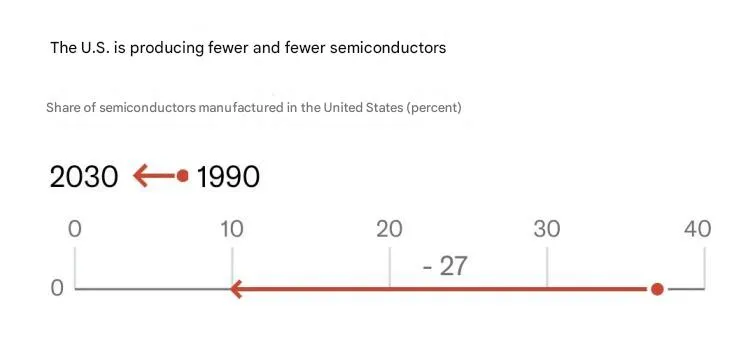
The Biden administration has high hopes for the revitalization of the domestic chip manufacturing industry and has backed this practice with significant federal funding. In 2022, the government passed the CHIPS and Science Act, one of the largest industrial policy initiatives in U.S. history. The bill allocates $52.7 billion in subsidies to strengthen U.S. chip autonomy and provides generous tax incentives to companies that invest in U.S. facilities and U.S. workers. "American manufacturing is back, friends!"
TSMC and the United States seem to be a match made in heaven. In December 2022, a striking scene emerged in Northeast Phoenix. President Biden stood in front of a huge American flag at a TSMC construction site and announced, "American manufacturing is back, guys!" In the audience, Apple CEO Tim Cook applauded enthusiastically.
TSMC would have received $6.6 billion in subsidies and loans under the CHIPS Act. On the same day, the company announced plans to build a second plant in Phoenix, with a total of three currently under construction. According to the Wall Street Journal, TSMC is seeking up to $15 billion in U.S. government subsidies.
At the time, Arizona seemed to be the biggest winner. Construction alone is expected to create 20,000 jobs, 6,000 permanent jobs at factories and thousands more at suppliers.
However, for Matthias Cooper, his experience in Taiwan was anything but a win-win. His days there were getting worse and worse every month. What started out as a slight unpleasantness gradually evolved into a hostile work environment. The Taiwanese "partner" who was in charge of guiding him saw him as a competitor and hoped that he would surpass him.
The problem is exacerbated by the language barrier. Almost all communication – meetings, training sessions and documents – is conducted in Mandarin. Cooper had to rely on Google Translate to teach himself how to operate the machines he was supposed to manage in Phoenix. "It's a very chaotic environment. This is a deliberate attempt to prevent us from learning," he said, describing what he saw as systematic hostile activity against U.S. employees.
Cooper's experience is consistent with that of others. On the employee review site Glassdoor, TSMC has an average rating of 3.1 out of 5. Dozens of comments complained about the lack of work-life balance and warned potential employees: "If you have a choice, don't look this way." "
These claims echo the allegations in a recent class-action lawsuit filed in federal court in San Jose, California. In a lawsuit reviewed by the Neue Zürcher Zeitung, TSMC is accused of systematically discriminating against non-Asian employees, especially non-Taiwanese employees. The plaintiff, a former U.S. human resources manager, claimed that TSMC often refused promotion opportunities, created a hostile work environment, and was retaliated against for whistleblowers.
The lawsuit seeks damages from the plaintiffs and thousands of other employees, saying TSMC's discriminatory practices violated civil rights laws. If the court rules in favor of the plaintiffs, TSMC could face hefty fines and potentially lose CHIPS Act subsidies.
Challenges in the desert
To witness TSMC's ambitions, you have to go to the desert of Arizona. Forty minutes north of downtown Phoenix, a sprawling construction site dominates the barren landscape of the Sonoran Desert. The site covers an area of 445 hectares, the equivalent of 556 football fields, and is filled with countless cranes, scaffolding, trailers, and hundreds of cars. Modeled after TSMC's large campus at Taiwan's Hsinchu Science Park, the plant is designed to become the headquarters for chip manufacturing in the United States.
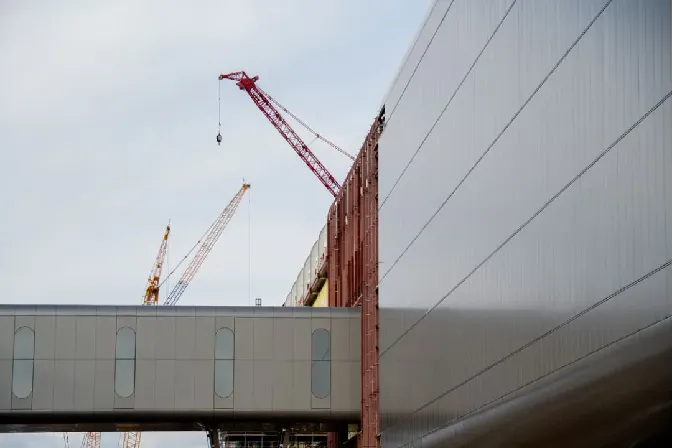
The first of the three plants is already in operation. Its sleek silver façade and sky bridges give the building a unique futuristic feel. The driveway is lined with giant pillar cacti, and the entrance is decorated with a large fountain. At lunchtime, hundreds of workers in safety vests and helmets came in and out, carrying clear backpacks. The plaque, engraved with quotes from Tim Cook and Joe Biden, reminds employees who leave the parking lot that they are part of history.
However, this so-called success story is teetering. While Apple's first high-performance chips have recently rolled off the assembly line, full production has been delayed until 2025. Even more advanced three-nanometer chips were originally scheduled to go into production in 2026, but they won't go into production until 2028.
TSMC leadership blamed the U.S. labor market for the delay. In the summer of 2023, then-TSMC CEO Liu Deyin lamented the extraordinary difficulty of finding qualified workers in the United States. He argues that Americans are accustomed to working in simple factories rather than complex semiconductor factories, and he also claims that Americans have a poor work ethic. TSMC's solution is to temporarily let experienced Taiwanese workers fly in.
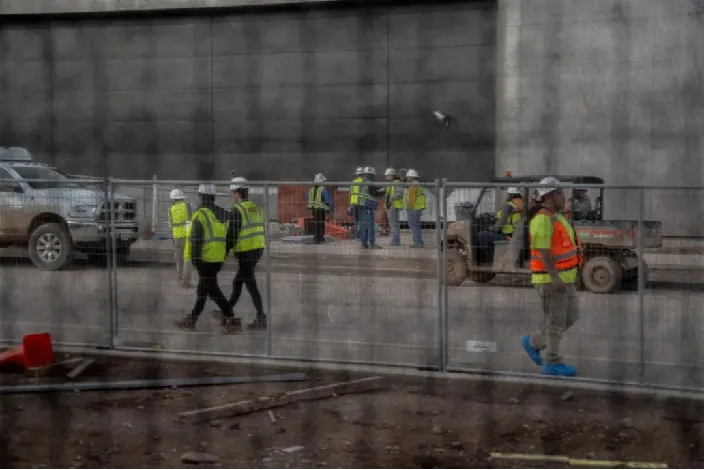
But factory workers are not the only ones who have flown in from Taiwan. According to the New York Times, about half of the site's 2,200 construction workers were also flown in from Taiwan. This sparked outrage from local union leaders, such as Aaron Butler, who stated that "blaming American workers for the project's problems is offensive to American workers and inaccurate." "U.S. media reported on accidents and safety issues at TSMC construction sites, in which at least three workers died. Recently, the Arizona Building Inspection Bureau fined TSMC $16,000 for safety violations.
Surprisingly, one of the sharpest critics of TSMC's foray into the United States is its founder, Zhang Zhongmou. He once said, "Different brands of computers can often be connected together, but people of different cultures can't." During then-Speaker of the House of Representatives Nancy Pelosi's visit to Taiwan in 2022, the then-91-year-old once again expressed his doubts about the joint venture.
Jason Hsu, a former Taiwanese commissioner now living in the United States, shares Chang's skepticism. In a telephone interview, he explained that in Taiwan, a unique network of suppliers has formed around TSMC. He said it wasn't easy to replicate and stressed that "this is not a bubble tea shop." He pointed out cultural differences, and for Taiwanese people, "working for TSMC is something to be proud of, it's an honor." "Employees are willing to work unpaid overtime or in the middle of the night if needed. In fact, TSMC contributes a whopping 9% to Taiwan's GDP.
Luck matters
However, for Matthias Cooper, pride isn't part of his experience at TSMC. Instead, during his nine months in Taiwan, frustration grew, culminating in a serious security incident. Cooper recalls a group of engineers starting to repair a machine that hadn't been completely shut down, with toxic gases still lingering in the pipes. When he tried to intervene, the answer he got was: "In Taiwan, we don't do [that kind of thing]." Recalling that incident, he added: "Luckily, nothing bad happened. During his time in Taiwan, he witnessed several industrial accidents, including incidents in which workers lost their fingers.
When Cooper reported the matter to his superiors, he was abruptly transferred to a civilian position, which he believed was revenge. He was fired shortly after notifying TSMC's central security department. He claimed that the company forced him to sign a letter of resignation under the threat of reimbursement of the training costs.
Not everyone has had Cooper's experience. Another former employee who worked at TSMC's Taiwan and Phoenix factories told the Neue Zürcher Zeitung that he had worked for the company for 18 months and had not personally experienced discrimination. Still, he acknowledges that many of his American colleagues have experienced discrimination. They are called into the factory at any time of the night, meetings are conducted only in Mandarin, and they face relentless pressure to meet artificially imposed deadlines. "I consider myself lucky," said the young man, who estimates that 80 percent of his former U.S. colleagues have left the company.
The outcome of the legal proceedings against TSMC will be revealed in the coming months. The company faces accusations of discrimination and unsafe working conditions at high risk. Analysts believe TSMC will seek an out-of-court settlement to avoid jeopardizing its multibillion-dollar investment in Arizona.
If chip production begins in 2025 as planned, the project will still bring significant benefits to the United States. Miller said the U.S. could become the world's second-largest producer of high-performance chips by 2030. But to achieve this, TSMC needs to address the challenge of managing a diverse international workforce.
As for Cooper, he has left the semiconductor industry altogether. Looking back on his experience, he would not recommend anyone to work at TSMC. The working environment is terrible, he said.
Reference Link https://www.nzz.ch/english/the-dark-side-of-arizonas-chip-industry-boom-ld.1858854
Send Inquiry